Each day, millions of preppers prepare for food survival as a global food crisis, rising oil prices, and climate change reshape how we think about our next meal.
Food survival is a term that was almost never heard in wealthy nations a generation ago. Today it is part of everyday conversation in the United States, Canada, and Europe. News headlines about empty shelves, shipping delays, extreme weather, pandemics, and political instability have pushed ordinary families to ask a simple question: What happens if the food stops showing up?
Every day, hundreds of people join the millions of Americans already growing their own food, learning to cook from scratch, and building basic emergency food storage. For some, it is a hobby and a way to eat healthier. For others, it is a serious strategy for food survival in the face of what many believe is an inevitable change to our way of life. In a world of fragile supply chains, self-reliance no longer looks extreme—it looks wise.
These individuals are often called food preppers. They are part of a rapidly growing movement that values self-sufficiency above all else: growing, freezing, drying, canning, and storing enough food for months or even years. Some families aim to build a one-year pantry; others target up to ten years of shelf-stable food. While their goals differ, the mindset is the same—do not leave your survival entirely in the hands of a vulnerable global food system.
Millions of Preppers Prepare for the Worst—And Hope for the Best
The modern survivalist movement is no longer limited to fringe groups or stereotypical “back-to-the-land” hippies. Today’s food-survival community includes business professionals, suburban parents, homesteaders, farmers (the first notable American survivalists), veterans, and faith communities. Religious groups such as the Mormon Church have long encouraged members to build at least a one-year supply of food in case of natural or manmade disaster. Now, a much wider audience is adopting similar principles.
A modern food crisis can be triggered by many events: severe storms, crop failures, cyberattacks on critical infrastructure, fertilizer shortages, pandemics, political unrest, or a sharp spike in energy prices. Each of these threats can ripple through the supply chain, leading to higher costs and sudden scarcity. Preppers respond to this reality not with panic, but with planning—focusing on food storage, home gardens, water security, and basic skills that increase their ability to adapt.
At its core, food survival is about more than fear. It is about building resilience. Families who store staple foods, learn how to grow vegetables, and support local farmers are better positioned to ride out disruptions—whether those disruptions last a week, a month, or much longer. Food survival is not just for “the end of the world” scenarios; it is relevant for every storm, job loss, or unexpected crisis that might interrupt normal life.
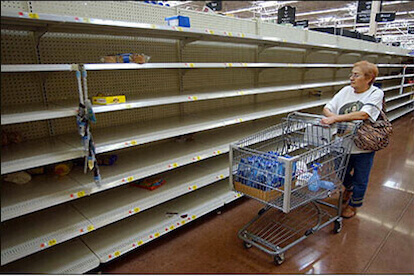
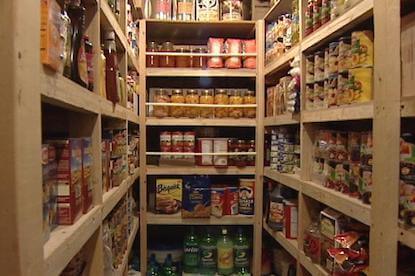

Food Survival and Oil Prices
Just a few short years ago, the world was on the brink of a breakdown in the global food supply system driven by the rapid rise in the price of oil. As oil topped $110 per barrel, food prices doubled almost overnight in many parts of the world. For low-income families, this meant an immediate crisis. The food riots that helped spark the Arab Spring began just days after prices for basic staples quadrupled in some regions.
The uncomfortable truth is that our entire global food system runs on oil. Oil powers farm machinery, fuels tractors and harvesters, and is used to manufacture synthetic fertilizers and pesticides. It is embedded in the feed given to animals, the energy needed to process and preserve food, and the transportation network that moves goods from farms and factories to warehouses and supermarkets. Without affordable oil, supermarket shelves would be bare in a matter of days, not weeks.
Many analysts believe that we are at or near peak oil, and that long-term prices will trend higher even if they fluctuate in the short term. If oil becomes significantly more expensive, the cost of everything in the food chain will rise. Some global forecasters predict that within the next decade, people in the U.S. could be paying two to three times more for basic foods like bread, eggs, and milk. For preppers focused on food survival, this is a clear signal: build resilience now rather than waiting for prices to spike.
Food Survival and Speculation
Speculation in financial markets also plays a powerful role in global food security. Instead of lending money to small businesses and local farmers, many large financial institutions invest heavily in food commodity markets. When massive volumes of capital chase short-term gains in wheat, corn, soy, and rice futures, prices can become detached from the real costs of production and transport.
This kind of market-driven speculation—greed, if we are honest—pushes food prices higher and increases volatility. For wealthy traders, these swings are an opportunity. For poor families living on the edge, they can be catastrophic. When staple foods rise beyond reach, entire regions can destabilize, sparking protests, migration, and conflict. From a food survival perspective, this is another reason individuals and communities are turning to home production, local food networks, and long-term storage to bypass the most damaging effects of global speculation.
Food Survival and Climate Change
Climate change has been debated and politicized for years, but in fields and gardens around the world, the reality is no longer theoretical. Weather patterns are shifting. Areas that were once reliably wet are drying out. Other regions are seeing heavier rainfall and flooding, destroying crops and eroding soil. Heat waves and late frosts damage orchards and vineyards. Farmers are being forced to adapt quickly, often with limited resources.
Scientists have already concluded that some droughts—like the prolonged drought in Texas and other parts of the American Southwest—are likely to persist and spread. As water becomes scarcer and temperatures rise, traditional row-crop agriculture becomes more risky and expensive. Crop failures, reduced yields, and increased pest pressure all add up to higher prices and more uncertainty in the food system.
This is one reason why the term food survival has gone from obscure to mainstream in such a short time. Each day, hundreds of people join the millions of Americans already growing their own food, experimenting with raised beds, containers, hoop houses, and greenhouses, and looking for climate-smart methods that can keep producing even when the weather is unpredictable. Local food resilience is one of the most practical answers to global climate disruption.
What Can You Do to Improve Food Survival at Home?
Clearly, growing your own food is one of the most powerful steps you can take to prepare for an economic or environmental disaster. However, it is important to be realistic. A traditional garden planted in long rows can provide fresh produce, but it rarely produces enough calories to fully sustain a family for a year or more. A family of four might need at least an acre—perhaps more—if they rely on conventional spacing and methods.
Many of us, especially those who live in cities or suburbs, simply do not have that kind of land. Patios, rooftops, small backyards, and community garden plots are wonderful resources, but they require smarter design to produce meaningful amounts of food. This is where innovative growing systems and efficient designs come in. By using vertical space, circular planting patterns, and targeted irrigation, it is possible to grow much more food in a surprisingly small footprint.
Fortunately, there is a new technology that can grow the equivalent of an acre of food using up to 90% less land area. One Crop Circle system is designed to produce an acre of food in just 60 feet of space. Instead of long rows, plants are arranged in circular patterns that maximize sunlight, airflow, and root zone efficiency. Combined with water-smart irrigation and careful crop planning, these systems can form the backbone of a serious home or community food survival plan— even on small sites.
Whether you are a seasoned prepper or someone just beginning to think about food survival, the message is the same: start where you are, with what you have. Build a modest pantry, learn to store staple foods, plant even a small garden, and explore innovative systems that make it possible to grow more food with less water, less land, and less dependence on a fragile global supply chain.