Food Shortages: From Empty Shelves to Community Resilience
For most people in wealthy nations, supermarket shelves felt permanent—bright aisles full of food, open every day. That illusion cracked when supply chains snarled, prices spiked, and suddenly some shelves were bare. Food shortages moved from history books and distant headlines into everyday life: missing staples, purchase limits, and “out of stock” signs on basic items.
Food shortages are more than a temporary inconvenience. When they last weeks or months, they reveal how fragile the global food system really is—and how quickly vulnerable households can slide from discomfort into genuine food insecurity. The good news is that there are practical ways to reduce the impact of shortages by strengthening local food systems, diversifying where our food comes from, and using water-smart technologies such as Crop Circle Farms & Gardens.
This page looks at what food shortages are, what causes them, how they affect families and countries, and how we can respond—from modest household preparedness to larger community projects supported by New Leaf Technologies, TreePlantation.com, and GrowingToGive.org.
What Is a Food Shortage?
A food shortage happens when the normal supply of essential foods is disrupted to the point that people cannot easily buy what they need, where they usually shop. Shortages can be:
- Local – affecting a city, region, or island.
- National – often triggered by economic crises or conflict.
- Global – when multiple “breadbasket” regions or key trade routes are affected at once.
Shortages are related to food security but not identical to it. A country might produce enough food overall and still have local shortages due to distribution or pricing problems. Conversely, shelves might look full but prices can be so high that poor households experience a shortage in everything but name—they simply can’t afford what’s there.
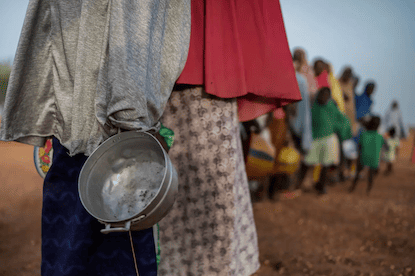

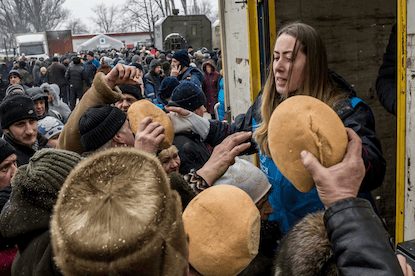
Key Causes of Food Shortages
Food shortages rarely have a single cause. Most arise from several pressures hitting at once—climate shocks, conflict, supply chain breakdowns, or policy decisions. Here are some of the main drivers.
1. Climate Shocks & Crop Failures
Heat waves, droughts, floods, and storms can wipe out harvests across entire regions. When a major exporter of wheat, rice, or corn suffers a poor harvest, the impact ripples worldwide. Countries that depend on imports face shortages and price spikes, especially if they lack foreign currency or reserves.
Climate change makes these shocks more frequent and more extreme. That is why water-smart agriculture and drought-tolerant systems are becoming so important in reducing the risk of future shortages.
2. War, Conflict & Political Instability
Conflict can disrupt every part of the food chain:
- Farmers are displaced or unable to plant and harvest safely.
- Storage facilities, markets, and ports are damaged or blocked.
- Trade routes become dangerous or are closed entirely.
Even if global production is technically “enough,” wars in key exporting regions can create real shortages in countries that rely heavily on imports. This is one reason why building local and regional food systems is a critical part of long-term food justice.
3. Supply Chain & Transport Disruptions
Modern food systems depend on complex logistics: trucks, ships, ports, warehouses, and “just in time” deliveries. When any part of this chain breaks down—due to pandemics, strikes, cyberattacks, or natural disasters—food that exists on farms or in warehouses may simply not reach the shelves.
Island nations and remote regions feel these disruptions first and hardest. A single damaged port, shipping delay, or fuel shortage can leave them facing immediate food shortages, even if they are only a short plane ride away from abundance.
4. Export Bans, Trade Policies & Speculation
When governments fear shortages at home, they sometimes impose export bans on key crops. While this can temporarily protect domestic consumers, it leaves importing countries scrambling. At the same time, speculation in food commodities can drive prices up faster and higher than real-world shortages justify.
In effect, financial markets and political decisions can turn a manageable production problem into a real shortage and a full-blown food conflict in fragile regions.
5. Energy Prices & Input Shortages
Food is energy intensive. It takes fuel for machinery, fertilizer manufacturing, processing, refrigeration, and transport. When oil and gas prices rise sharply, the cost of producing and moving food goes up. If farmers cannot afford fertilizer or diesel, they may plant fewer acres or harvest less, contributing to shortages and higher prices later on.
How Food Shortages Affect Households & Communities
Food shortages affect more than convenience. They shape health, stability, and trust in institutions.
- Household stress: Parents face the daily anxiety of not knowing whether they will find or afford the foods their families rely on.
- Nutrition declines: When choices shrink, people often fall back on ultra-processed foods with longer shelf life but poorer nutrition.
- Social tension: Long lines, rationing, and sudden price hikes can feed resentment and unrest.
- Small business pressure: Local shops, restaurants, and food vendors struggle to source products and keep their doors open.
In communities that already live close to the edge, even short-lived shortages can push people into deeper poverty and long-term health problems.
Short-Term Responses vs. Long-Term Resilience
When shortages hit, governments and communities often focus on short-term fixes:
- Emergency imports or airlifts.
- Price controls or temporary subsidies.
- Food banks, vouchers, and relief distributions.
These measures are vital in a crisis, but they don’t address the underlying vulnerabilities. Real resilience comes from redesigning how and where we grow and distribute food.
Building Local Resilience to Food Shortages
The opposite of a fragile system is a diverse, locally-rooted food system that can keep producing food even when imports slow down. That’s where technologies like Crop Circle Farms and organizations like TreePlantation.com and GrowingToGive.org come in.
Water-Smart, High-Density Micro-Farms
Crop Circle Farms & Gardens, developed by New Leaf Technologies, use circular planting patterns, vertical layering, and targeted irrigation to grow more food on very small sites—often with 80–90% less water than conventional row cropping.
Instead of depending solely on long-distance supply chains, communities can:
- Install micro-farms at schools, churches, clinics, and community centers.
- Use Crop Circle raised gardens and the plant yield calculator to plan serious production on small footprints.
- Train youth and local growers to manage these systems as green jobs that also put fresh food on local tables.
Even a single site can buffer a neighborhood against short-term shortages; a network of sites across a city or island can make a profound difference.
Trees, Forests & Long-Term Stability
Shortages are often worse in landscapes that have lost forests and tree cover. Without trees, soils erode, water cycles break down, and local climates become more extreme. That’s why long-term tree planting and agroforestry, as supported by TreePlantation.com, matter for food shortages too.
Using tools like the Tree Carbon Calculator, Tree Value Calculator, and Tree Spacing Calculator, communities and investors can design social-impact forests that:
- Protect watersheds and reduce drought and flood risk.
- Provide fruit, nuts, timber, and non-timber forest products.
- Support agroforestry systems where trees and food crops grow together.
Over time, these forests make regions less vulnerable to the climate shocks that drive many food shortages.
Nonprofit Partners & Community Projects
Technology alone doesn’t stop food shortages. It has to be implemented on the ground with real people and real partnerships. Growing To Give, a registered 501(c)(3), works with schools, food banks, and community groups to install water-smart gardens, Crop Circle systems, and urban food forests in places where shortages and food deserts hit hardest.
Projects such as the Arizona food desert initiatives, the Phoenix Urban Food Forest Initiative, and the Spiral Farm Project show how under-used urban and peri-urban land can be transformed into productive, educational spaces that keep food flowing locally—even when global systems falter.
What Households Can Do About Food Shortages
Not everyone can plant a forest or build a micro-farm network—but almost everyone can take small steps that reduce their vulnerability to shortages:
- Keep a modest buffer pantry of staple foods you actually eat.
- Learn to cook from basic ingredients rather than relying solely on ready-made products.
- Grow what you can: herbs on a windowsill, containers on a balcony, raised beds in a yard, or a plot in a community garden.
- Support local farmers, markets, and CSAs so more production stays close to home.
- Talk with neighbors, schools, and faith groups about shared gardens or Crop Circle installations.
None of these actions will “fix” global food shortages alone, but together they build a safety net that is closer, more resilient, and more under community control.
Food Shortages FAQs
What is a food shortage?
A food shortage occurs when the usual supply of essential foods is disrupted or reduced in a region, leading to empty shelves, rationing, or difficulty accessing basic staples. Shortages can be local or global, temporary or prolonged, depending on the causes and the responses taken by governments, businesses, and communities.
What causes food shortages?
Food shortages are typically caused by overlapping factors such as climate shocks and crop failures, war and conflict, export bans and trade policies, supply chain and transport disruptions, and energy price spikes. Economic crises and financial speculation in food commodities can also worsen shortages and make prices more volatile for consumers.
How can households prepare for food shortages?
Households can prepare by keeping a modest buffer pantry, learning to cook from basic staples, and growing some food at home or in community gardens. Supporting local farmers and learning about water-smart gardening methods helps ensure that more food is available close to where people live, making communities less dependent on long, fragile supply chains.
How do Crop Circle Farms and partners help reduce the impact of food shortages?
Crop Circle Farms & Gardens, developed by New Leaf Technologies, use circular, high-density, water-efficient designs to grow more food on small sites with up to 80–90% less water. Combined with long-term social-impact forestry from TreePlantation.com and community projects led by GrowingToGive.org, these systems strengthen local food production so communities are less exposed to global shortages and empty shelves.
Conclusion: Turning Food Shortages into a Wake-Up Call
Food shortages are a warning sign. They tell us that our current food system—efficient, global, and fragile—is not enough on its own. The answer is not panic buying or fear, but practical steps toward resilience: water-smart gardens, micro-farms, social-impact forestry, and stronger community networks.
By combining technologies like Crop Circle Farms with the long-term landscape work of TreePlantation.com and the community partnerships of Growing To Give, we can move from a world where people fear empty shelves to one where every neighborhood has at least some capacity to feed itself. Food shortages will still happen—but their impact can be softened, shared, and ultimately transformed into a catalyst for a more secure, just, and resilient food future.