Food Justice: Who Gets to Eat Well, and Why It’s Unequal
When most people hear “food crisis,” they think about global shortages, droughts, or conflict. But there is another side to the story: food justice. Food justice looks at who has access to affordable, healthy, culturally appropriate food—and who doesn’t. It asks why some neighborhoods are full of supermarkets, farmers markets, and fresh produce while others are ringed by fast food, liquor stores, and ultra-processed snacks.
In many countries, including the United States, race and income still strongly predict what kind of food a family can reliably access. Low-income communities of color are far more likely to live in food deserts—or as many advocates now say, food apartheid—where the lack of good food is not an accident of geography but the result of policy decisions, zoning, redlining, and decades of disinvestment. Food justice insists that this is not just a “nutrition issue.” It is a matter of human rights, racial justice, and economic justice.
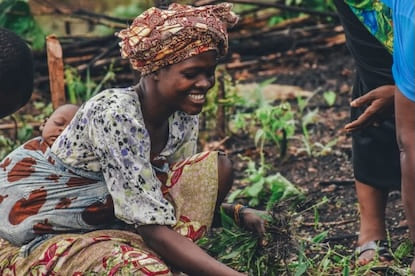
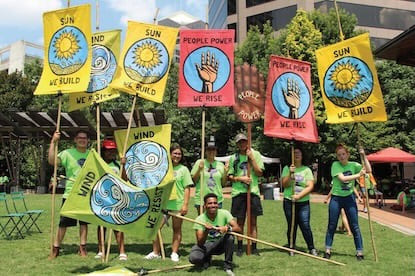
At the same time, food justice is also about solutions: building local, community-led food systems that share power, restore land, and make sure every child can plan their future, not their next meal. This is where water-smart systems like Crop Circle Farms & Gardens, long-term tree planting through TreePlantation.com, and nonprofit projects led by GrowingToGive.org all begin to connect.
What Do We Mean by Food Justice?
Food justice starts from a simple idea: no community should be denied good food because of its race, income, immigration status, or zip code. Everyone deserves:
- Access to affordable, nutritious food within a reasonable distance of home.
- The ability to grow, share, and sell food in ways that reflect their culture and values.
- Safe working conditions and fair wages for everyone who plants, harvests, cooks, and serves food.
- Freedom from pollution, toxic waste, and environmental harm tied to food production and industry.
Food justice connects hunger and food security with deeper questions: Who owns the land? Who controls the seeds and technology? Who profits from food, and who pays the hidden costs in health and environmental damage? It overlaps with food sovereignty, which emphasizes the right of people and communities to define their own food systems.
How Food Injustice Shows Up on the Ground
Food injustice is not hypothetical. It shows up in very specific, everyday ways:
- Food deserts and food swamps: Neighborhoods with few or no full-service grocery stores, but an abundance of fast food, dollar stores, and heavily marketed junk food.
- Health disparities: Higher rates of diabetes, heart disease, obesity, and diet-related illness in low-income communities and communities of color, driven partly by unequal access to healthy food.
- Low wages for food workers: Farmworkers, grocery workers, and restaurant staff often earn poverty wages and work in unsafe conditions—even while handling the food that keeps others alive.
- Environmental racism: Communities that already lack fresh food are more likely to be sited near landfills, processing plants, or polluted water—bearing the environmental costs of an unjust food system.
When we talk about food inequality or food apartheid, we are talking about systems that make these patterns predictable—not random, and not inevitable.
Why Food Justice and Climate Justice Are Linked
Climate change doesn’t hit everyone equally. The same communities that face food injustice are often on the front lines of heat waves, floods, storms, and droughts. When a hurricane floods a coastal city, it’s the poorest neighborhoods that take longest to recover. When drought drives up prices, it’s low-wage workers who feel it first.
At the same time, industrial agriculture and long-distance supply chains contribute significantly to greenhouse-gas emissions and environmental degradation. People living near large-scale feedlots, processing plants, or pesticide-intensive farms bear health burdens that wealthier neighborhoods never see.
Food justice and climate justice are therefore deeply connected. Solutions that grow food locally, rebuild soils, and plant trees can:
- Reduce emissions and chemical use.
- Protect water and biodiversity.
- Increase local resilience to storms and heatwaves.
- Put more control into the hands of communities directly impacted by climate and food injustice.
Local Food Systems as a Food Justice Strategy
One of the most powerful food justice tools is a local, community-led food system. That can include:
- Community and school gardens.
- Micro-farms on church land, vacant lots, and rooftops.
- Worker-owned groceries and co-ops.
- Community-supported agriculture (CSA) that prioritizes low-income households.
The challenge is that many food-insecure neighborhoods also face water scarcity, limited land, and tight budgets. That’s why water-efficient, high-yield systems like Crop Circle Farms & Gardens, developed by New Leaf Technologies, are so relevant to food justice.
Crop Circle Farms & Gardens: More Food, Less Water, Small Footprint
Crop Circle systems are designed to grow serious amounts of food in very small spaces using:
- Circular, high-density layouts that pack more plants into a given area without overcrowding.
- Layered growing—trellised crops above, mid-story crops in the middle, and ground covers below.
- Water-smart irrigation that sends water directly to roots, cutting waste by up to 80–90%.
- Healthy soils built with compost, mulches, and reduced tillage to boost fertility without heavy chemical inputs.
For food justice projects, this matters. It means:
- Schools and community centers can install micro-farms on small plots or courtyards.
- Urban neighborhoods can turn tiny spaces into teaching gardens and living classrooms.
- Communities can use tools like the plant yield calculator to plan how many families a site can serve, and which crops deliver the best nutrition per square foot.
In a world where many families live in apartments, public housing, or dense neighborhoods, growing “an acre of food” in a fraction of the land opens up new possibilities for food justice and food survival.
TreePlantation.com & Food Justice: Forests, Water & Long-Term Security
Food justice isn’t only about vegetables and fresh produce. It’s also about the landscapes that make food possible—soils, water, forests, and climate. Projects supported by TreePlantation.com help communities and impact investors design forests that:
- Protect watersheds that supply drinking and irrigation water.
- Store carbon and buffer extreme weather.
- Provide fruit, nuts, timber, and non-timber products over decades.
Tools like the Tree Carbon Calculator, Tree Value Calculator, and Tree Spacing Calculator make it easier to plan social-impact forests that deliver both environmental and financial returns.
When these forests are linked with agroforestry—systems where food crops and trees grow together—they can:
- Stabilize slopes and reduce erosion around hillside farming communities.
- Create shade and cooler microclimates in hot, exposed areas.
- Support long-term livelihoods that keep local food producers on their land.
For marginalized rural communities, this kind of long-term landscape work is a crucial part of food justice: it keeps land productive and in the hands of those who steward it.
Growing To Give: Community Projects that Center Food Justice
Growing To Give, a registered 501(c)(3), takes these tools and ideas and places them in real communities. Its projects include:
- Arizona food desert initiatives that bring Root Tube and Crop Circle gardens into low-income neighborhoods.
- The Phoenix Urban Food Forest Initiative, transforming under-used urban land into multi-layered food forests.
- The Spiral Farm Project, rewilding landscapes around spiral rivers and productive farms.
- School garden and micro-farm projects that turn campuses into living classrooms where students learn science, ecology, entrepreneurship—and the basics of growing their own food.
In every case, Growing To Give works with local partners—schools, community groups, faith organizations—to make sure projects reflect the culture, priorities, and leadership of the community itself. That’s what food justice looks like in practice: not “dropping in” a solution, but co-designing it with the people who live there.
Food Justice FAQs
What is food justice?
Food justice is the idea that everyone deserves access to affordable, culturally appropriate, nutritious food, and that no community should carry a disproportionate burden of hunger, pollution, or exploitation in the food system. It connects food access with racial, economic, and environmental justice, and asks how power and resources are shared from farm to fork.
What causes food injustice?
Food injustice is driven by a mix of historical and current factors: segregation and redlining that shaped where grocery stores and infrastructure were built; underinvestment in public transit and neighborhood services; corporate consolidation in agriculture and retail; low wages for food workers; environmental racism; and the growing impacts of climate change. Together, these forces create predictable patterns of abundance in some neighborhoods and scarcity in others.
How is food justice different from food security?
Food security focuses on whether people have enough food. Food justice goes further, asking: Who controls the land and resources? Who is exposed to pollution and exploitation? Whose culture and traditions shape the food system? You can have food security without justice—for example, when people rely on unhealthy, low-wage, or environmentally destructive systems to meet their basic needs. Food justice seeks solutions that are fair, sustainable, and community-led.
How can communities advance food justice?
Communities can advance food justice by organizing around local priorities and building practical alternatives: starting community and school gardens; installing water-smart systems like Crop Circle Farms & Gardens; supporting co-ops and independent grocers; forming relationships with local farmers; advocating for better wages and protections for food workers; and partnering with organizations such as TreePlantation.com and GrowingToGive.org that center equity, education, and long-term land stewardship.
Conclusion: From Charity to Justice
Food pantries, soup kitchens, and relief efforts are essential in a crisis, but they are not enough. Food justice calls us to look deeper—at the land, the laws, the labor, and the lives behind every meal. It invites us to move from temporary charity to long-term change: fair wages, healthy neighborhoods, shared land, and community-controlled food systems.
By linking water-smart agriculture from New Leaf Technologies and Crop Circle Farms with the social-impact forestry models of TreePlantation.com and the community work of Growing To Give, we can help build food systems that are local, fair, resilient, and regenerative. In that world, food justice is not a campaign; it is simply the way the food system works—for everyone.