Global Food Crisis: Entering a New Era of Food Insecurity
The phrase global food crisis is no longer a distant, abstract idea. It is becoming a daily reality for millions of people. For decades, food shortages and famine were associated mostly with underdeveloped regions where millions live in poverty and face starvation every day. Today, however, food crisis is a phrase heard in wealthy and developed nations including Europe, North America, and most surprisingly, the United States. Rising food prices, political instability, and fragile supply chains are exposing the weaknesses of a global food system that has been pushed to its limits.
One core problem is that impoverished communities are still trying to feed themselves using outdated agricultural systems that have outlived their usefulness. These systems were never designed to keep up with a world that grows by more than 250,000 people per day. Another problem is a changing climate that is destabilizing once reliable growing seasons. Weather patterns are shifting in ways not seen since before the last ice age nearly 300,000 years ago. Droughts, floods, heat waves, and extreme storms are damaging crops, degrading soil, and making it harder than ever to produce enough food.
Food Crisis, Poverty, and Political Instability
These pressures are pushing the world toward a precipice. Once we cross that edge, we risk decades of deepening poverty and widespread starvation. As recently as 2008, 25 countries experienced protests and riots over steep increases in food prices. Governments were challenged or overthrown, and millions were forced into poverty, becoming refugees almost overnight. In many places, war has replaced peace, and social unrest has replaced stability—all triggered or worsened by food shortages and unaffordable staples.
An expert global food crisis panel at The United Nations warned as early as July 2012 that the world’s agricultural supply system was close to collapse. They cautioned that without urgent changes, millions more could be driven into poverty, starved, and forced into conflict. The Earth Policy Research Center has also commented that the global climate is changing so quickly and so unpredictably that a collapse of the global food supply system is inevitable unless we radically change how we grow, distribute, and protect food. If the current trend continues, as much as two-thirds of the world’s population could end up living in poverty, with many facing chronic hunger.
For the Seventh Year in Twelve, the Planet Has Consumed More Food Than It Produces
While governments around the world debate how to respond to the looming food crisis, market speculation often makes the situation worse. Short-term profit taking and speculation on commodities can drive food prices even higher, putting basic staples out of reach for vulnerable families. While the United States and other nations focus on energy security and control of natural resources, countries like China are spearheading a global “land grab,” acquiring millions of acres of farmland in places like Africa, Southeast Asia, and Argentina in an effort to secure food for their own populations.
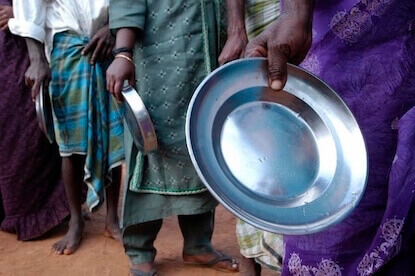
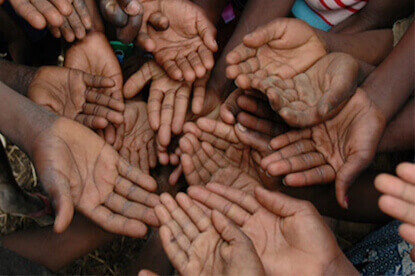
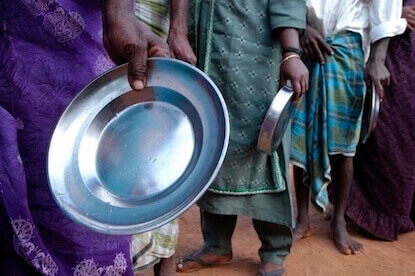
For the seventh year in twelve, the planet has consumed more food than it produces, draining reserves to their lowest levels since countries began stockpiling decades ago. China’s food situation is especially concerning; some analysts believe the country’s reserves would last only weeks in the event of a major global disruption. Just a decade ago, poorer households in many countries spent about 20% of their income on food. Today in some regions, that share has shot up to 80%, pushing millions of families into poverty and hunger.
History has shown that new food production technology is key to solving hunger and starvation. In the 1960s, the Green Revolution introduced improved seeds, irrigation, and fertilizers that helped triple global food production in a few short years. Now, the world needs a new kind of breakthrough—a next-generation food technology that produces more food on less land with far less water and fewer chemical inputs. The innovative systems developed at Crop Circle Farms are designed to do exactly that.
Global Food Crisis and Food Security: Only Half the World Has It
Food security is built on three essential pillars: having enough food available, having the resources to obtain nutritious food, and having reliable access to clean water and sanitation. In many developing countries, agriculture is the largest source of employment and the primary way families secure their daily food. Yet the trend toward one-sided agricultural agreements with multinational corporations has reduced the number of people directly employed on the land.
As local farming is displaced, millions of people are removed from a simple rural life that once provided basic food security. In response, some developing nations are now renegotiating trade agreements and raising tariffs on key food products to protect farm employment and national food security. But policy changes alone are not enough. The most sustainable way to build food security is to help people become more self-sufficient in their food-growing practices. Many smallholder farmers still work by hand or with oxen. While these methods can be gentler on the environment, they are extremely labor-intensive and require thousands of people doing the same work just to feed a single town or village. Smarter tools and smarter growing systems can help farmers produce more food per square foot without sacrificing soil health.
Global Food Crisis and Food Shortages: Limited Resources, Growing Demand
A modern food shortage sounds unthinkable in a high-tech world—but it is exactly what we are facing. Many of us are familiar with heartbreaking images from parts of Africa, Asia, and Latin America, where nearly one third of the global population struggles with chronic hunger. Generous people and organizations donate to NGOs and relief efforts, and while these actions matter, they are not enough by themselves. The root challenge is that the global food system uses enormous amounts of land, water, and energy to produce resource-intensive animal protein.
Today, about one quarter of all protein consumed worldwide comes from animal sources. Leading researchers warn that this number will likely need to drop dramatically—possibly to around 5%—if we are going to feed the additional 2 billion people expected to join the planet in the next 30 years. That means roughly half of us may need to adopt a more plant-based, vegetarian, or flexitarian diet if we hope to avoid the worst impacts of the global food crisis.
Global Food Crisis and Food Control: The Struggle Between Corporate and Community Agriculture
Traditional farming is under pressure from large corporate interests all over the world. Over the last four decades, most of the profits in agriculture have flowed to large-scale operations run by agribusiness, while smaller farms have struggled to survive. This concentration of food control has caused many family farms to disappear. In the United States, income from small farms often averages just $10,000 per year, forcing farmers to take on second jobs or sell their land.
The dominant model of large, chemical-dependent corporate farming is a major contributor to climate change, biodiversity loss, water contamination, and preventable disease. At the same time, it leaves communities more vulnerable to price shocks and supply chain disruptions. If we want to save family farms, support community agriculture, and build resilient local food systems, we must embrace new approaches that let farmers grow more food on smaller areas of land with fewer resources.
Breakthrough Food Growing Technology: More Food in Less Space
The good news is that there has been a major breakthrough in food growing technology that can help even the smallest farms, community gardens, and urban growers. By combining circular planting designs, intensive vertical production, and highly efficient irrigation, these systems make it possible to harvest significantly more food per square foot while using up to 90% less water and fertilizer compared to conventional methods.
This next wave of innovation—championed by projects such as Crop Circle Farms—is designed for a world under pressure. It is built for smallholder farmers, city dwellers, island nations, and anyone who wants to grow more food with fewer resources. By turning underutilized spaces into high-output growing circles, we can take a meaningful step toward easing the global food crisis, strengthening food security, and restoring hope to communities that have been left on the edge of hunger for far too long.