Food production depends on soil quality — and without sustainable farming, soil is disappearing up to 40 times faster than nature can replace it.
Food production starts with the soil. Every grain, fruit, and vegetable we eat is ultimately a reflection of the ground it grew in. The more living biology and nutrients in our soil, the more nutrient-dense our food can be. Since the 1950s, however, the rise of mechanized agriculture, synthetic fertilizers, and high-pressure irrigation has steadily degraded soil quality. We increased yields in the short term, but the hidden cost has been a slow collapse in soil health and, with it, the long-term quality of our food.
In the early decades of industrial agriculture, the immediate boost in production looked like a miracle. Tractors replaced horses, chemicals replaced compost, and large monoculture fields replaced diverse, mixed farms. We were able to feed more people, export more grain, and drive down the cost of food—at least temporarily. But beneath the surface, the structure and life of the soil were being stripped away. Every pass of the plow and every application of harsh chemicals broke down organic matter and disrupted the soil ecosystem that healthy crops depend on.
Since the 1970s, thousands of acres of productive farmland have disappeared or become severely degraded, undermining global food production. Agricultural experts now warn that if current practices continue, we may have as little as 50–60 years of productive topsoil left worldwide. That means our children and grandchildren could face a food crisis driven not only by climate and population growth, but by the simple fact that the soil itself can no longer support crops. Without a major shift to sustainable farming, the foundations of food production are at risk.
Soil Disappearing Faster Than We Can Replace It
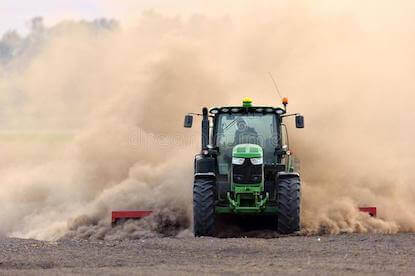
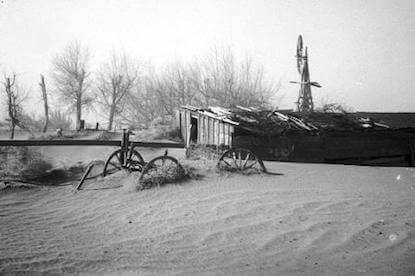
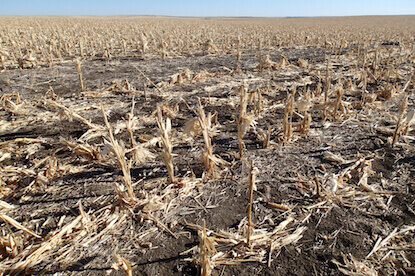
Unsustainable farming is stripping nutrient-rich topsoil at a rate estimated to be up to 40 times faster than it can be naturally replenished. Before the advent of large-scale mechanized agriculture, many farming cultures relied on traditional sustainable farming practices to protect the soil: rotating crops, planting cover crops, integrating livestock, and periodically resting fields. One season’s crop would build fertility for the next, and it was common to leave a field fallow under natural grasses while animals grazed, fertilizing the land with manure.
Historians have noted that some of the largest wheat harvests in North American history came from the first few plantings by settlers on the Great Plains, where massive herds of buffalo had roamed and fertilized the land for centuries. This rich prairie soil turned the region into the “breadbasket of the world.” But within a few decades of continuous plowing and cropping, that same land was exhausted. The result was the Dust Bowl of the 1930s—millions of acres of topsoil blown away by wind, farms abandoned, and families forced to migrate.
In many parts of the world today, not much has changed. Population pressure and market demands force farmers to plant the same land again and again until it will no longer grow anything—not even weeds. This is dangerous when we remember that the amount of land suitable for crop production is finite. Once soil is stripped of organic matter and life, it becomes little more than dust and sand. Rebuilding true topsoil is a slow process: it can take 300–600 years to form just a few inches of healthy soil, depending on climate and geography. We do not have centuries to waste.
Sustainable Farming Practices Protect Soil and Food Production
Farmland is degraded in many ways, not only from overcropping. Overhead irrigation, especially large pivot irrigation systems, draws down aquifers and can leach nutrients from the soil profile. Excessive irrigation in dry climates often leads to salinization, where salts build up in the root zone until nothing will grow. Experts estimate that nearly 25% of irrigated farmland worldwide may face serious salinity problems in the next two decades if practices do not change.
When soil is left bare—without cover crops, mulch, or living roots—it becomes extremely vulnerable. Strong winds can remove up to an inch of topsoil in a single storm. Heavy rain can wash soil into rivers and oceans, taking with it precious nutrients and organic matter. By contrast, when land is managed with sustainable farming methods—cover crops, minimal tillage, contour planting, and living groundcover—the soil stays in place, absorbs more water, and supports a thriving underground ecosystem.
Modern chemical-intensive agriculture also harms the microscopic life that makes soil truly fertile. Many pesticides and fungicides do not only target pests; they also affect beneficial insects, fungi, and microbes that help plants access nutrients and defend against disease. Over time, this leads to “dead soils” that depend on ever-increasing amounts of external inputs just to produce the same yield. Sustainable and regenerative farming, by contrast, seeks to work with soil biology instead of against it, building resilience naturally.
Regenerative Agriculture: Rebuilding Soil for Future Food Production
A growing number of farmers and researchers are turning to regenerative agriculture, a soil-centered approach that aims not just to sustain the land, but to heal and improve it. Regenerative practices include keeping living roots in the ground as long as possible, reducing or eliminating deep tillage, planting diverse crop rotations, integrating trees (agroforestry), and using compost and organic amendments to feed soil life.
These practices can gradually restore soil structure, increase organic matter, and boost the soil’s capacity to store water. As soil health improves, crops become more resilient to drought, heat, and pests. Yields can stabilize and even increase, all while reducing dependence on synthetic fertilizers and chemicals. In this way, regenerative and sustainable farming directly support long-term food production and climate resilience.
Sustainable Farming, Soil, and Crop Circle Farming
While regenerative methods can do a great deal, the scale of the global soil crisis demands additional innovation. A new technology developed by New Leaf Technologies is designed specifically to save topsoil, conserve water, and build new soil year after year. Instead of planting large fields of crops in straight rows over open ground, this approach uses compact, circular, and highly efficient systems that focus on plant health and resource efficiency.
Rather than broadcasting fertilizer and water across entire fields, the Crop Circle system uses targeted, spot applications of nutrients and moisture directly where plant roots need them most. This minimizes leaching, reduces runoff, and allows the surrounding soil to rest and regenerate. Crop Circle farming is significantly more productive per acre because it concentrates resources and optimizes plant spacing, airflow, and light exposure.
By growing more food in a smaller area with less water and fewer chemical inputs, Crop Circle farming aligns perfectly with the goals of sustainable food production. It helps protect remaining farmland from overuse, creates opportunities to rewild or restore degraded areas, and supports long-term soil-building processes. For communities facing land shortages, water stress, or declining soil quality, this technology offers a practical path to produce more food while healing the earth beneath our feet.
Ultimately, the future of food production depends on how we treat the soil today. By combining time-tested sustainable farming practices with innovative systems like Crop Circle farming, we can slow—and even reverse— the loss of topsoil. That means healthier crops, more resilient farms, and a better chance that future generations will inherit land that can still nourish them.