Food Security: Causes, Effects & Crop Circle Farm Solutions
Food security sounds simple: can people reliably get enough safe, nutritious food to live healthy, active lives? In reality, it’s one of the most complex challenges of our time. Climate shocks, conflict, broken supply chains, and rising prices are pushing hundreds of millions of people toward hunger and malnutrition.
At the same time, a new generation of solutions is treating food security as a systems challenge—linking soil, water, energy, livelihoods, climate, and community. This is where New Leaf Technologies and its Crop Circle Farms & Gardens fit: turning small, often neglected spaces into high-output, water-smart micro-farms that can be replicated in neighborhoods, schools, islands, and fragile communities around the world.
What Do We Mean by Food Security?
Food security exists when all people, at all times, have physical, social, and economic access to sufficient, safe, and nutritious food that meets their dietary needs and food preferences for an active, healthy life. It’s often described through four pillars:
- Availability – Is enough food being produced, imported, and stored?
- Access – Can people physically reach it and afford it?
- Utilization – Do they have clean water, cooking fuel, and nutrition knowledge?
- Stability – Are all of the above reliable over time, or easily disrupted?
When any one of these pillars fails, food insecurity follows. When several fail at once, local stress can escalate into a regional or global food crisis.
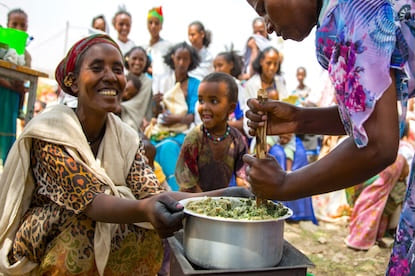
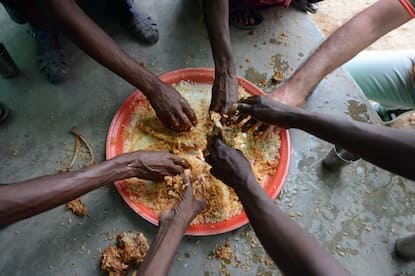
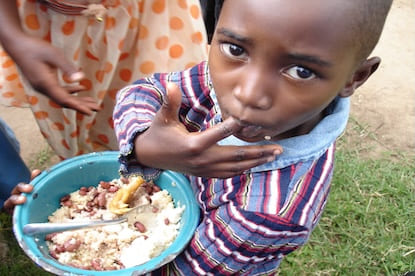
Why Food Security Is Under Threat
1. Climate Change & Extreme Weather
Droughts, heatwaves, floods, storms, and shifting seasons are hitting crops, livestock, and fisheries on every continent. Farms designed for “average” weather are now being slammed by “once in a century” extremes every few years. A single mega-drought or flood can wipe out a season’s harvest, destroy infrastructure, and leave communities dependent on imports or aid.
2. Conflict, Fragility & Displacement
Where there is war or chronic instability, there is almost always food insecurity. Armed conflict destroys farms, displaces farmers, blocks roads and ports, and makes it dangerous for traders and aid agencies to move food. Even if the world produces “enough” food overall, people trapped in conflict zones can still face famine because food cannot move safely from where it is to where it’s needed most.
3. Fragile, Over-Centralized Supply Chains
The modern food system is incredibly efficient—until it is disrupted. Long, complex supply chains depend on cheap energy, functioning ports, and just-in-time logistics. Shocks like pandemics, shipping bottlenecks, fertilizer shortages, or export bans can:
- Empty supermarket shelves in import-dependent regions.
- Leave farmers with crops they can’t sell while cities face shortages.
- Trigger rapid food price inflation that hits low-income households hardest.
4. Poverty, Inequality & Urban Food Deserts
Globally, there is usually enough food produced in total. The problem is who can afford it and who has practical access to it. Poor households spend a high share of their income on food and are pushed over the edge by even modest price increases. In cities, “food deserts” emerge—neighborhoods with no nearby source of fresh, healthy food—relying instead on corner stores and fast food.
5. Degraded Soils & Water Scarcity
Decades of intensive, extractive farming have left soils depleted and water sources stressed. Farmers end up chasing diminishing returns with more fertilizer and more water, even as aquifers drop and rivers run dry. Without soil regeneration and water-smart design, yields become increasingly volatile—undermining long-term food security.
Human Impacts of Food Insecurity
Food insecurity isn’t just “being hungry.” It has cascading effects across every part of life:
- Health: Malnutrition weakens immune systems, stunts child growth, and increases risks in pregnancy and old age. Cheap, ultra-processed calories often replace balanced diets, creating a double burden of obesity and micronutrient deficiency in the same communities.
- Education: Hungry children struggle to concentrate and learn. Families under constant stress about food are less able to invest in schooling, training, or small enterprises.
- Social stability: Sudden food-price spikes have contributed to protests, riots, and political unrest in countries where families are already on the financial edge.
- Migration: When farms fail and cities offer no alternatives, people move—inside countries and across borders—often in dangerous conditions.
From Global Crisis to Local, Water-Smart Solutions
Tackling food security in a lasting way means doing two things at once:
- Redesigning how and where we grow food so it uses far less water and inputs, and is more resilient to climate shocks.
- Bringing food production closer to where people live, learn, and work so communities are less dependent on long-distance, fragile supply chains.
That is the mission space of New Leaf Technologies: developing green technologies for food, forests, and renewable energy tailored to a world in transition. Its flagship food-security tools are Crop Circle Farms & Gardens— high-density, circular micro-farm systems designed specifically for water-stressed and space-limited environments.
Crop Circle Farms & Gardens: A Practical Food Security Tool
Crop Circle systems turn small footprints into serious food production using a few core design principles:
Water-Smart by Design
Crop Circle beds are engineered to use a fraction of the water required by conventional row cropping. Circular bed geometry, deep mulching, and targeted irrigation send water directly to the root zone and dramatically reduce evaporation. In many designs, water use can be cut by up to 80–90% compared to traditional surface watering.
High-Density, Circular Planting Layouts
Instead of long straight lines, crops are planted in spirals and circles. This:
- Increases plant count per square foot without overcrowding.
- Creates microclimates—wind-protected zones and shaded soil that holds moisture.
- Makes the garden naturally walkable and visually engaging for teaching and tours.
Using Crop Circle raised gardens and the plant yield calculator, it’s common to double or even triple yield per square foot while cutting water and fertilizer needs dramatically.
Vertical & Layered Growing
Crop Circle Farms stack productivity by growing in layers:
- Upper canopy crops on trellises or vertical supports.
- Mid-story crops like peppers, tomatoes, or brassicas.
- Ground-cover crops and herbs that protect soil and suppress weeds.
This layered design mimics natural ecosystems and makes far better use of sunlight and space than a single, flat crop layer.
Healthy Soils, Lower Input Costs
New Leaf’s approach puts soil health at the center. Composting, organic mulches, reduced tillage, and precise nutrient management rebuild soil structure and biology instead of mining it. That means less dependence on expensive synthetic fertilizers, better water-holding capacity, and higher long-term productivity from the same piece of ground.
Modular, “Farm-in-a-Box” Deployment
Crop Circle Farms & Gardens are modular, making them ideal food security tools:
- A school, church, resort, or community group can start with a single installation—a proof-of-concept food security site and living classroom.
- Once the system is running, it can be replicated across neighborhoods, islands, or cities using the same design rules and training.
- Local teams can be hired and trained to install and manage systems, creating new green jobs alongside local food.
Trees, Forests & Long-Term Food System Resilience
Food security isn’t only about vegetables and grains. It’s also about the health of the landscapes that support them. Forests buffer climate extremes, stabilize soils, and protect water sources. That’s where long-term tree projects—like those led by TreePlantation.com—fit into the wider food-security picture.
Tree Plantation’s social-impact forestry and suite of tools, including the Tree Carbon Calculator, Tree Value Calculator, and Tree Spacing Calculator, help communities and investors plan forests that store carbon, protect soils and water, and generate income over time. These forests in turn support agroforestry systems that integrate fruit, nut, and timber trees with food crops—a powerful way to stabilize local climates and diversify food and income sources for rural families.
Growing To Give: Partnering to Free People from Hunger
Technology alone doesn’t end hunger. It has to be placed in real communities with real people, and supported for the long haul. That’s the role of nonprofit partners like Growing To Give, a registered 501(c)(3) that develops projects and partnerships to free people from hunger across the U.S. and around the world.
Growing To Give integrates New Leaf’s Crop Circle systems into projects ranging from:
- Arizona food desert initiatives that bring Root Tube and Crop Circle gardens into low-income neighborhoods.
- The Phoenix Urban Food Forest Initiative, transforming under-used urban land into multi-layered food forests.
- The Spiral Farm Project, rewilding landscapes around spiral-shaped rivers and productive farms.
- School, community, and inner-city garden projects that pair food access with education and safe gathering spaces.
Individuals, foundations, and corporate sponsors who want to support this work can learn more or get involved via the About, Contact, and donation pages on GrowingToGive.org.
Food Security FAQs
What is meant by food security?
Food security exists when all people, at all times, have physical, social, and economic access to sufficient, safe, and nutritious food that meets their dietary needs and preferences for an active, healthy life. It rests on four pillars: availability, access, utilization, and stability over time.
What are the main causes of food insecurity today?
Major drivers include climate change and extreme weather, armed conflict and political instability, fragile and over-centralized supply chains, poverty and inequality, and degraded soils and water scarcity. These factors often overlap, pushing millions into crisis-level hunger and malnutrition.
How do Crop Circle Farms & Gardens help improve food security?
Crop Circle Farms & Gardens, developed by New Leaf Technologies, use circular planting patterns, vertical layering, and water-efficient irrigation to grow more food in a small footprint with up to 80–90% less water. They are modular micro-farms designed for schools, neighborhoods, and island communities that reduce dependence on fragile food imports and create local, resilient food sources.
What roles do TreePlantation.com and GrowingToGive.org play?
TreePlantation.com provides tools and models for long-term social-impact forestry and agroforestry, helping protect soils, water, and local climates that support food systems. GrowingToGive.org is a nonprofit partner that installs and supports water-smart gardens and Crop Circle projects in real communities, schools, and food desert neighborhoods—connecting technology with people, training, and long-term support.
Conclusion: Building Food Security from the Ground Up
The global food crisis can feel overwhelming when you look only at statistics, commodity markets, and fractured geopolitics. But real food security is built from the ground up: one garden, one micro-farm, one schoolyard, and one rewilded landscape at a time.
By combining New Leaf Technologies’ water-smart Crop Circle Farms & Gardens with the long-term landscape resilience of Tree Plantation’s forestry projects and the community-driven work of Growing To Give, we can start to rebuild food systems that are:
- Local enough to withstand global supply shocks.
- Efficient enough to thrive in water-stressed regions.
- Inclusive enough to serve low-income and marginalized communities.
- Regenerative enough to heal the soils, forests, and waters that feed us all.
Food security is not a single project or product. It is a living network of people, technologies, lands, and communities working together. New Leaf Technologies, Crop Circle Farms & Gardens, TreePlantation.com, and GrowingToGive.org are all parts of that network—showing how we can grow more food, with less water, in the exact places people need it most.