Food Refugees: When Home Can No Longer Feed You
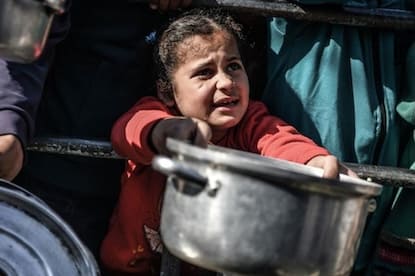
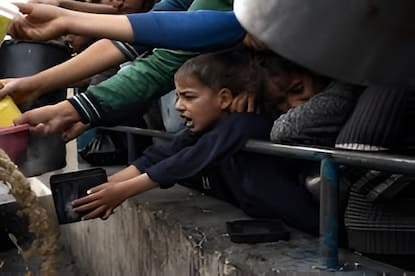
In news footage from Gaza, Bangladesh, the Horn of Africa, or Central America, certain images repeat: families carrying small bundles, children clinging to plastic water jugs, long lines for bread or a sack of grain. Behind those images is a painful truth: millions of people are on the move because they can no longer grow or afford food where they live. These are food refugees—people whose journey begins with an empty field, a dead herd, a dried-up well, or a price tag they can no longer pay.
Some cross borders and become international refugees. Many more remain inside their own countries as internally displaced people (IDPs), moving from rural villages to cities, camps, or temporary shelters in search of work, safety, and a meal they can trust will still be there tomorrow. Behind each statistic is a family that once hoped to stay rooted, to harvest the same land for generations, but was pushed out by forces beyond their control: climate shocks, war, economic collapse, and broken food systems.
This page explores who food refugees are, why they are increasing, how their journey connects to food shortages, food conflict, and food justice, and how practical solutions—like water-smart Crop Circle Farms & Gardens, social-impact forestry from TreePlantation.com, and community projects by GrowingToGive.org— can help reduce the pressure that forces people to leave home in the first place.
What Is a Food Refugee?
There is no single legal category called “food refugee,” but the idea is straightforward: a food refugee is someone forced to move because their home region can no longer feed them.
That failure may come from:
- Failed harvests after repeated droughts or floods.
- War or occupation cutting off markets and farmland.
- Extreme inequality and price spikes that make basic food unaffordable.
- Land degradation and desertification that slowly erase productivity.
In practice, food refugees often overlap with climate refugees and people fleeing conflict or persecution. What makes the term “food refugee” useful is that it centres one specific driver: hunger. The decision to leave is no longer theoretical; it is about whether your children will eat next week.
Why People Become Food Refugees: Main Drivers
Food displacement rarely has a single cause. It grows out of several pressures hitting the same communities over time. Here are some of the most common drivers.
1. Climate Change, Drought & Failed Harvests
Climate change is rearranging the map of where food can be grown. Rains arrive late—or not at all. When they come, they arrive as floods that wash away topsoil instead of gentle showers that soak in. Heat waves scorch crops before they ripen. Pests and diseases expand into new regions.
For smallholder farmers and pastoralists, a single bad year is a hardship. Two or three in a row can be fatal to a livelihood. Livestock die, seeds are eaten instead of saved, and debts mount. Eventually, the only option that feels possible is to leave—becoming a food refugee inside their own country or across a border.
This is why climate-resilient agriculture, including water-smart systems like Crop Circle Farms, matters so much. When farmers can grow more food with less water, and protect soils from erosion, they are less likely to be pushed off their land by climate shocks.
2. War, Blockades & Deliberate Starvation
In active conflicts, food is often caught in the crossfire—and sometimes deliberately targeted. Fields are burned, markets destroyed, roads and ports blocked. In extreme cases, food aid is withheld from certain regions or groups as a tool of control. Hunger becomes a weapon.
People living in these conditions may leave not only to escape bullets and bombs, but because they simply cannot find food. They join the ranks of food conflict victims, where hunger is both a consequence and an instrument of war.
3. Economic Collapse & Food Price Shocks
Even where fields are still green, people can become food refugees if prices rise beyond reach. Currency crashes, hyperinflation, collapsing wages, and spikes in global commodity prices can mean that food is technically available in markets—but out of reach for the poor.
Families who once scraped by may discover that their income now buys half, or a quarter, of last year’s food. They sell jewellery, tools, and animals. They borrow from relatives. When those options run out, migration becomes the survival plan.
4. Land Grabs, Degradation & Lost Livelihoods
Land is the foundation of food. When it is grabbed, degraded, or fenced off for other uses, the people who depended on it face a stark choice: adapt quickly with new livelihoods—or leave. Large-scale land acquisitions for export crops, mining, or speculation can displace entire communities.
Meanwhile, decades of unsustainable practices—overgrazing, deforestation, erosion—can leave soils so depleted that even those who remain can no longer grow enough. Here again, long-term reforestation and agroforestry, as promoted by TreePlantation.com, are crucial. Healthy forests and agroforestry systems help rebuild soil, hold water, and create diversified livelihoods that keep people rooted instead of uprooted.
Life as a Food Refugee: Camps, Cities & Uncertain Futures
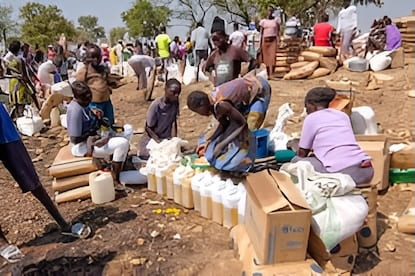
For many food refugees, the journey does not end when they cross a border or arrive in a city. In camps and informal settlements, life is often defined by queues: for registration, for food distributions, for water, for paperwork that may never move as quickly as hunger does.
Others become “invisible refugees” in overcrowded urban neighborhoods—working informal jobs, paying high rents for small rooms, and still struggling to secure enough food. In both settings, diets are often heavy on cheap starches and low on fresh fruits, vegetables, and protein. Malnutrition and micronutrient deficiencies can be widespread, even when people are no longer starving outright.
This is where local food survival strategies and community-led projects can make a real difference. Small gardens in camps, rooftop systems, and courtyard micro-farms may not meet all needs—but they provide fresh food, dignity, and skills that refugees can carry with them wherever they go.
Food Refugees, Food Justice & Responsibility
Food refugees are not simply victims of bad luck. Their displacement is often tied to broader patterns of food injustice and environmental injustice: nations that did the least to cause climate change suffer the most from its impacts; communities that contributed least to global emissions lose their harvests first.
Wealthy countries and corporations benefit from global supply chains that externalize environmental damage and social costs elsewhere. When those systems collapse—because of conflict, climate, or market shocks—the people with the fewest safety nets move first. Food refugees, in this sense, are living evidence of a global food system that is efficient on paper, but fragile and unfair in practice.
Addressing food refugees therefore means more than handing out rations. It means rethinking trade, energy, climate, and agriculture policies so that fewer communities are pushed into crisis in the first place.
How Local Food Systems Help People Stay Home
While international law and diplomacy are essential to protecting refugees, real prevention also happens at the community level. Local, resilient food systems give people more reasons to stay, even when the wider world becomes unstable.
Crop Circle Farms & Gardens: Growing More With Less
Crop Circle Farms & Gardens, developed by New Leaf Technologies, are designed to grow serious amounts of food on very small, scattered sites using:
- Circular, high-density layouts that increase yields per square foot.
- Layered crops—trellised, mid-story, and ground-cover plants sharing the same footprint.
- Water-smart irrigation that can cut water use by 80–90% compared to conventional methods.
- Healthy soils built with compost and mulches so fertility does not depend on expensive inputs.
In regions at risk of food displacement, these systems can be placed at schools, clinics, faith centers, and community hubs. Tools like the plant yield calculator and Crop Circle raised gardens help planners estimate how many families each site can help feed.
Every extra kilo of local food makes communities less dependent on long, fragile supply chains—and therefore less likely to be pushed into becoming food refugees when those chains break.
TreePlantation.com: Forests That Hold People and Water in Place
Long-term food security and reduced displacement depend on landscapes that can withstand shocks. Reforestation and agroforestry projects supported by TreePlantation.com help do exactly that.
Using tools like the Tree Carbon Calculator, Tree Value Calculator, and Tree Spacing Calculator, communities and investors can design forests that:
- Protect watersheds that feed farms and cities.
- Provide fruit, nuts, timber and non-timber products over decades.
- Support agroforestry systems where food crops and trees share the same land.
When hillsides stay forested, soils stay in place, springs continue to flow, and farms down-slope keep producing. That stability reduces one of the biggest drivers of food displacement: the slow collapse of rural livelihoods.
Growing To Give: Community Projects With People at the Center
Growing To Give, a registered 501(c)(3), focuses on turning these technologies into real projects that serve real communities—especially where food insecurity is already high.
Through initiatives like the Arizona food desert projects, the Phoenix Urban Food Forest Initiative, and the Spiral Farm Project, Growing To Give shows how under-used land can become living classrooms and reliable food sources.
Similar models can be adapted in regions under pressure from climate and conflict: instead of waiting for people to become food refugees, communities can build Feed-An-Island style micro-farms, Spiral Farms, and Crop Circle gardens that make it possible to stay.
Food Refugees FAQs
What is a food refugee?
A food refugee is a person or family forced to leave their home region because they can no longer grow, buy, or reliably access enough food. Drought, crop failure, war, blocked markets, economic collapse, or extreme price spikes push them to move in search of safe ground and a stable food supply.
What causes people to become food refugees?
People become food refugees when several pressures stack up: climate change and extreme weather, war and blockades, land degradation, loss of livestock, loss of income, and unaffordable food prices. When harvests fail and jobs vanish, families may see migration as the only way to keep their children alive.
How are food refugees different from climate refugees?
Climate refugees move primarily because their homes are threatened by climate impacts such as sea-level rise, storms, or heat. Food refugees move because they cannot access enough food, which may be caused by climate change but also by conflict, economic crisis, or discrimination. In reality, many displaced people are both climate and food refugees at the same time.
How can local food systems help reduce the number of food refugees?
Local, water-smart food systems help families stay rooted by making food production more resilient to shocks and less dependent on fragile supply chains. Micro-farms, community gardens, and agroforestry projects—such as Crop Circle Farms & Gardens, impact-forests designed with TreePlantation.com, and community initiatives from GrowingToGive.org— give people more control over their food future. When harvests and livelihoods are more secure, fewer families are forced to leave home in search of a meal.
Conclusion: A World Where Movement Is a Choice, Not a Necessity
Human beings have always moved—seeking trade, opportunity, and new beginnings. The tragedy of food refugees is that their movement is not a choice, but a last resort. They leave behind fields, neighbors, and graves not because they want to, but because home can no longer keep them alive.
Reducing the number of food refugees will require action at many levels: fairer trade and energy policies, deep climate emissions cuts, better governance, and protection for people on the move. But it also depends on the quieter work of building resilient, local food systems that keep communities fed in good years and bad.
By combining the innovations of New Leaf Technologies and Crop Circle Farms, the long-term landscape planning tools of TreePlantation.com, and the community-centered projects of Growing To Give, we can move toward a future where far fewer families are forced to flee with hunger at their heels—and where the phrase “food refugee” becomes a rare exception, not a growing norm.